
商学院学术讲座——陈蓉教授
发布者:殳妮 发布时间:2026-07-06 浏览次数:11
时间:2026年7月9日上午 10:30-11:30
地点:财科馆317室
题目:GenAI Assistance in a Professional Service Market: The Perish of Second Opinion
摘要:We investigate the impact of generative AI (GenAI) adoption in a market of professional services such as medical treatment and financial consulting where the product is a extit{professional opinion}. Providers of professional services often differentiate in their opinions. This allows consumers to benefit from seeking a second opinion, particularly when they are constrained from obtaining advice from a high-expertise provider. AI assistance improves the advice quality of a low-expertise provider, but has minimal impact on the advice quality of a high-expertise provider. Additionally, when two low-expertise providers both adopt AI assistance, their opinions become less diversified, reducing consumers' incentive to seek a second opinion. Considering a vertically differentiated market of professional services where a high-expertise provider and two low-expertise providers serve consumers with heterogeneous quality preferences, our study reveals important strategic implications of this \emph{opinion homogenizing effect} of AI adoption. First, we show that after service providers adopt AI assistance, the high-expertise provider may enhance profit, despite quality improvement occurring to its low-expertise rivals but not to itself. In contrast, the low-expertise providers always suffer a severe drop in margins, although their total payoffs may increase under a sufficiently large benefit in corporate image associated with AI adoption. Two interesting regions arise: a ``lose-lose'' region, where AI adoption harms all service providers, and a ``win-lose'' region, where the high-expertise provider is better off but neither of the low-expertise providers. Second, we show that after providers' AI adoption, low-type consumers always enjoy a surplus gain but high-type consumers may suffer a surplus loss. Total consumer surplus declines if low-expertise providers are highly differentiated in opinions before AI adoption. Lastly, when the two low-expertise providers make endogenous decisions regarding whether to adopt AI assistance, equilibrium may arise where neither of them adopt AI assistance or only one adopts.
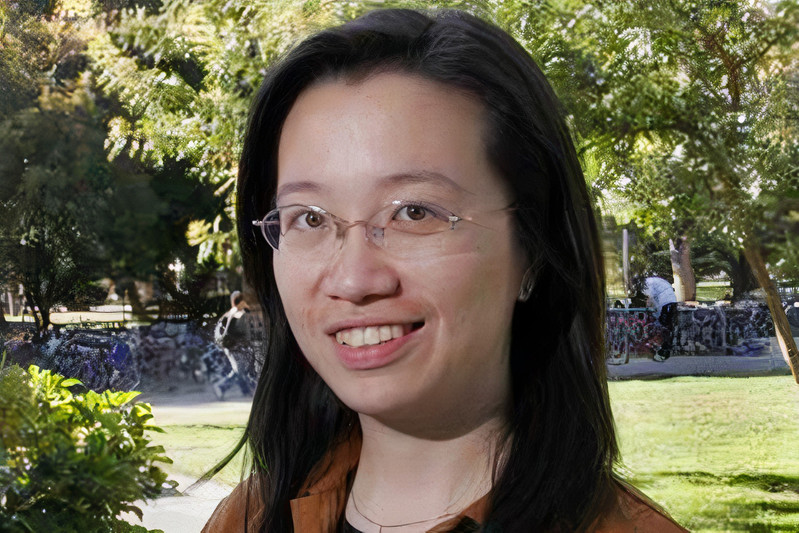 主讲人简介Bio:
Rong (Rachel) Chen is a Professor at the Graduate School of Management, University of California, Davis. Her research expertise lies at the intersection of pricing, valuation uncertainty, distribution channels, healthcare management and service scheduling. Her scholarly work has been widely published in leading academic journals, including Management Science, Manufacturing & Service Operations Management, Marketing Science,Production and Operations Management and Operations Research. Chen earned her Ph.D. in operations management from the Johnson Graduate School of Management, Cornell University, in 2003. She has been a member of INFORMS since 1999.


